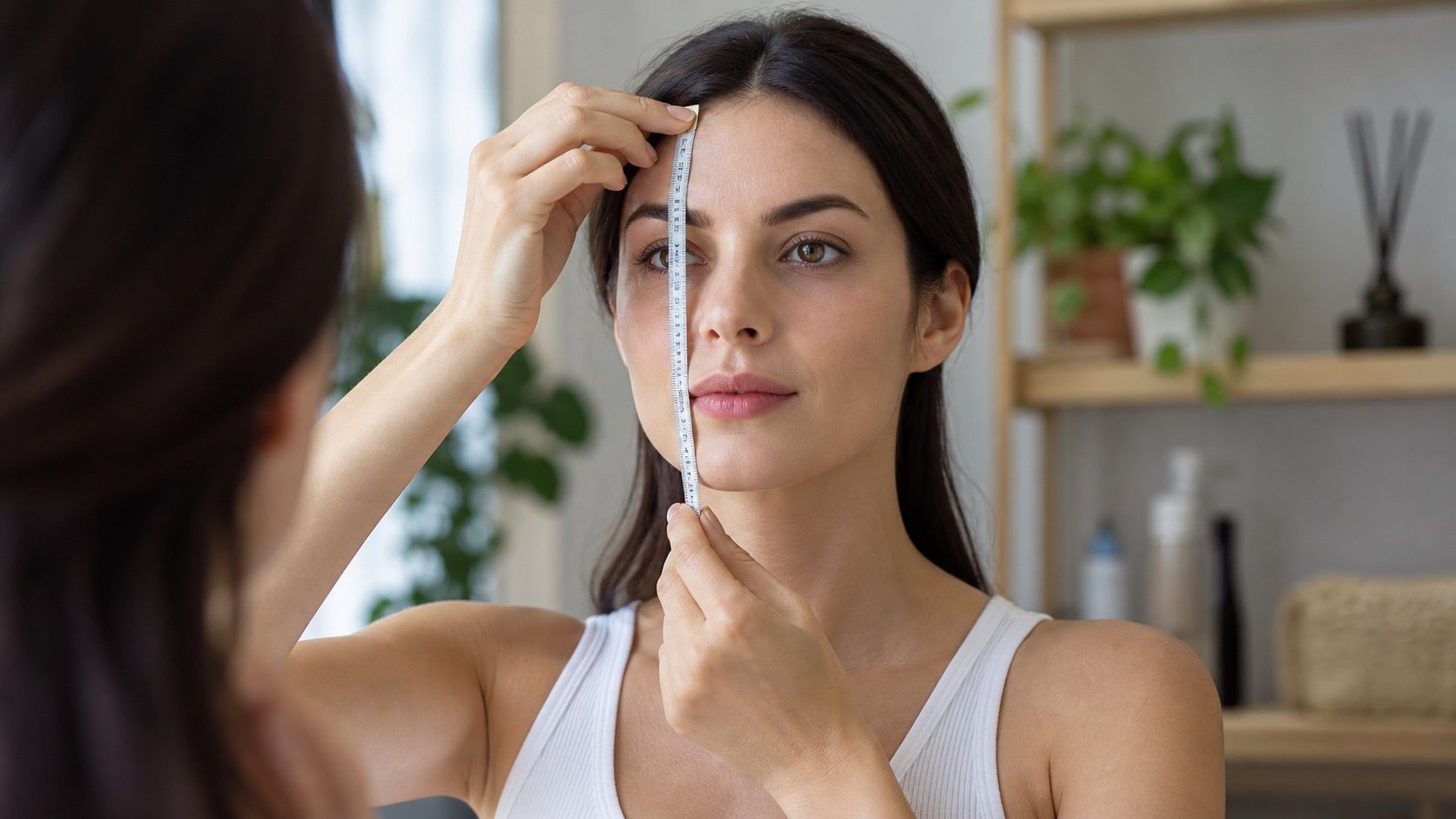
People often notice that their face looks different in old photos and wonder whether their face shape has changed. Sometimes it has changed in appearance a great deal; sometimes the camera, haircut, expression, or a fuller face is doing most of the work. A face-shape label describes a broad outline, not a permanent identity card, so it helps to separate the underlying structure from the things that frame it.
What a face-shape label is actually describing
Terms such as oval, round, square, heart, and oblong are shorthand for proportions: relative length, forehead width, cheekbone width, jaw width, and the way the chin tapers. They are useful because they make comparison easier. They are limited because a real face does not arrange itself into five tidy drawings. Many people have a broad upper face and a soft jaw, or high cheekbones with a longer lower face.
That is why a label can seem to change while the basic bone structure has not. A person who was described as round at nineteen may look oval after facial fullness changes, while still having the same forehead-to-jaw relationships. The practical question is not whether the old label was false. It is whether it still helps with the style decision in front of you.
Bone structure changes slowly, if at all
For most adults, the framework of the face remains the stable part of the picture. The width of the cheekbones, the set of the jaw, and the basic length of the mid-face do not shift because you changed skincare or slept badly. That is the reason a family resemblance can stay visible even as people gain weight, lose weight, or age.
There are exceptions: normal growth through adolescence, dental and medical changes, and injury can affect facial structure. But ordinary day-to-day variation is usually soft tissue, posture, or lighting. If a visible facial change is sudden, painful, one-sided, or worrying, face-shape advice is the wrong tool; a qualified clinician is the sensible place to start.
Weight can change facial fullness and the apparent outline
Does weight change face shape? It can change how the outline reads. Facial fat and fluid can add softness around the cheeks, jawline, and under-chin area, making angles less obvious. With weight loss, cheekbones and jaw contours may appear clearer. Neither view is more “real”; both are real versions of the same face at different levels of fullness.
Do not judge this from a single before-and-after selfie. A close lens can make the centre of the face look fuller, and a different hairstyle can expose more jawline. Compare photos taken at a similar distance, eye level, and expression. If the widest point has moved visually from the cheeks toward the forehead or jaw, that may guide a new glasses or blush choice more usefully than insisting on the previous label.
| What changes | What you may notice | What usually stays more stable |
|---|---|---|
| Weight or fluid retention | Fuller cheeks and a softer jawline | Basic cheekbone and jaw framework |
| Age-related soft-tissue change | Less cheek volume or a different lower-face contour | Overall skeletal proportions |
| Haircut or fringe | Forehead width and face length appear different | Your actual hairline and bone structure |
| Camera distance and angle | Centre, chin, or jaw appears enlarged or shortened | Nothing about the face itself |
Age changes contours more than a diagram admits
Face shape changes with age are often changes in volume, skin elasticity, and the way light falls across the face. The cheeks may become less full, the temples may look more defined, and the jawline can appear softer or more angular depending on the person. A label that suited a teenage face can feel less descriptive later, even when the underlying proportions are recognisable.
It is tempting to treat that as a problem to correct. Usually it is simply information. A haircut with more movement around the cheek area, a lighter glasses frame, or blush placed a little higher may feel more current than repeating a routine chosen years ago. The goal is not to preserve an old outline but to see the present one clearly.
Hair, makeup, and grooming can redraw the frame
A centre part exposes face length and symmetry; a side part can shift the apparent balance of the forehead. Heavy bangs shorten the visible upper face, while height at the crown makes the whole outline seem longer. Facial hair can strengthen the lower face or hide a pointed chin. These are visual changes, but they matter when you are deciding whether a frame or hairstyle feels balanced.
Makeup works similarly. Contour can suggest a more defined cheek or jaw, and blush can draw attention upward, yet neither changes anatomy. Use those tools for the effect you enjoy rather than to chase a category. If a style chart says a feature should be minimised but you like that feature, the chart has reached the end of its authority.
Update reference photos instead of relying on memory
Take a plain photo every year or two if you like tracking these shifts: camera at eye level, a little distance, even daylight, hair away from the outline, and a neutral expression. Save the setting details. This gives you a much fairer comparison than scrolling through a mixture of holiday photos, front-camera selfies, and images made under restaurant lights.
Then use the photo for a practical decision. Are the frames you wore five years ago still comfortable and proportionate? Does a different brow line now appeal? Would a shorter haircut reveal a cheekbone you want to show? Face shape is a flexible description. Let it update with you, rather than asking it to freeze you at one moment.
There is no deadline for deciding. The most useful comparison is patient: the same calm photograph, a familiar mirror, and a style choice made because it works now rather than because it once matched a diagram.
When in doubt, compare what remains visible across different months: the set of the cheekbones, the direction of the jaw, and the proportions that are still there when styling is simple. That view is usually steadier and much kinder than treating every reflected change as a new category.