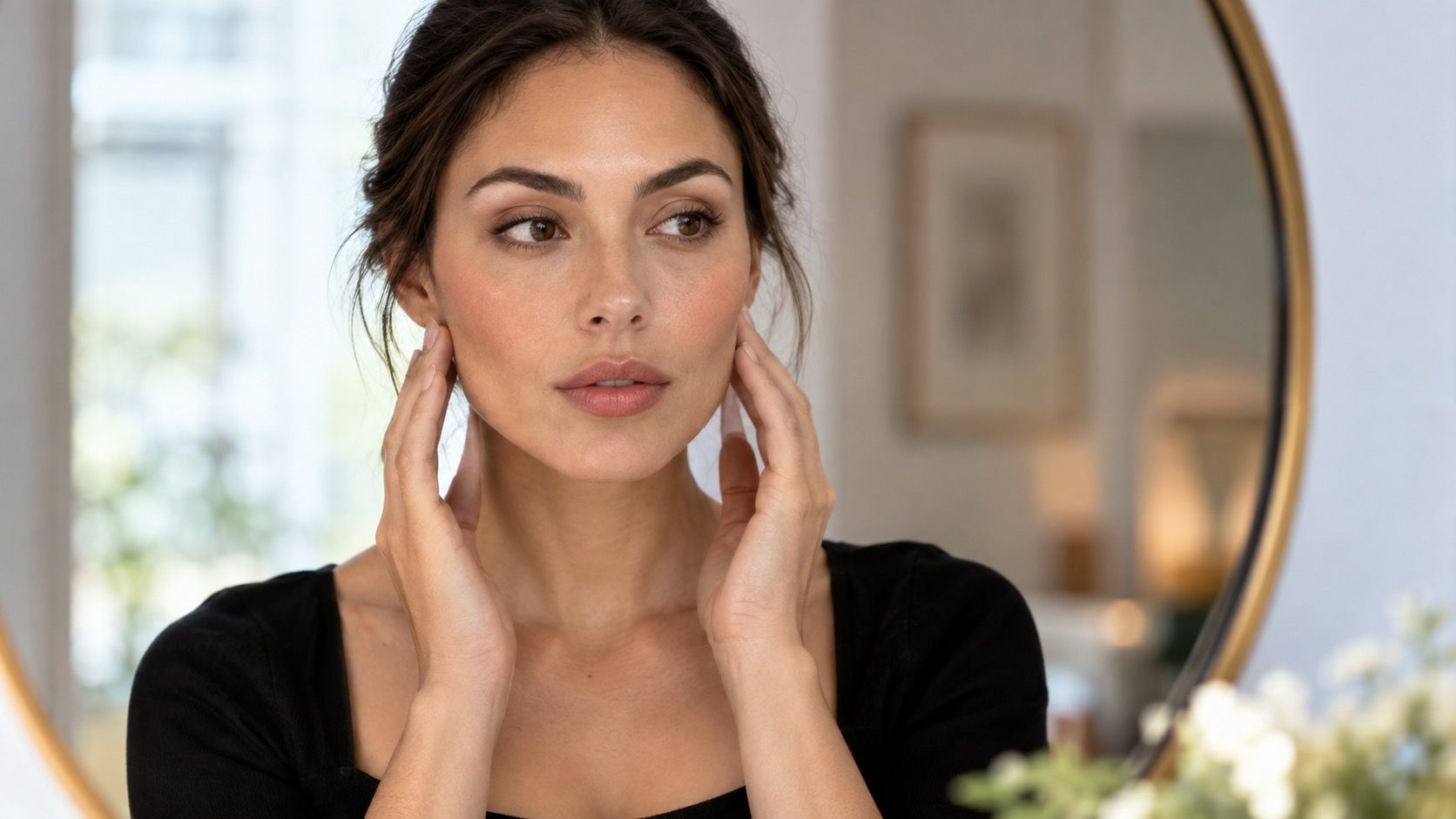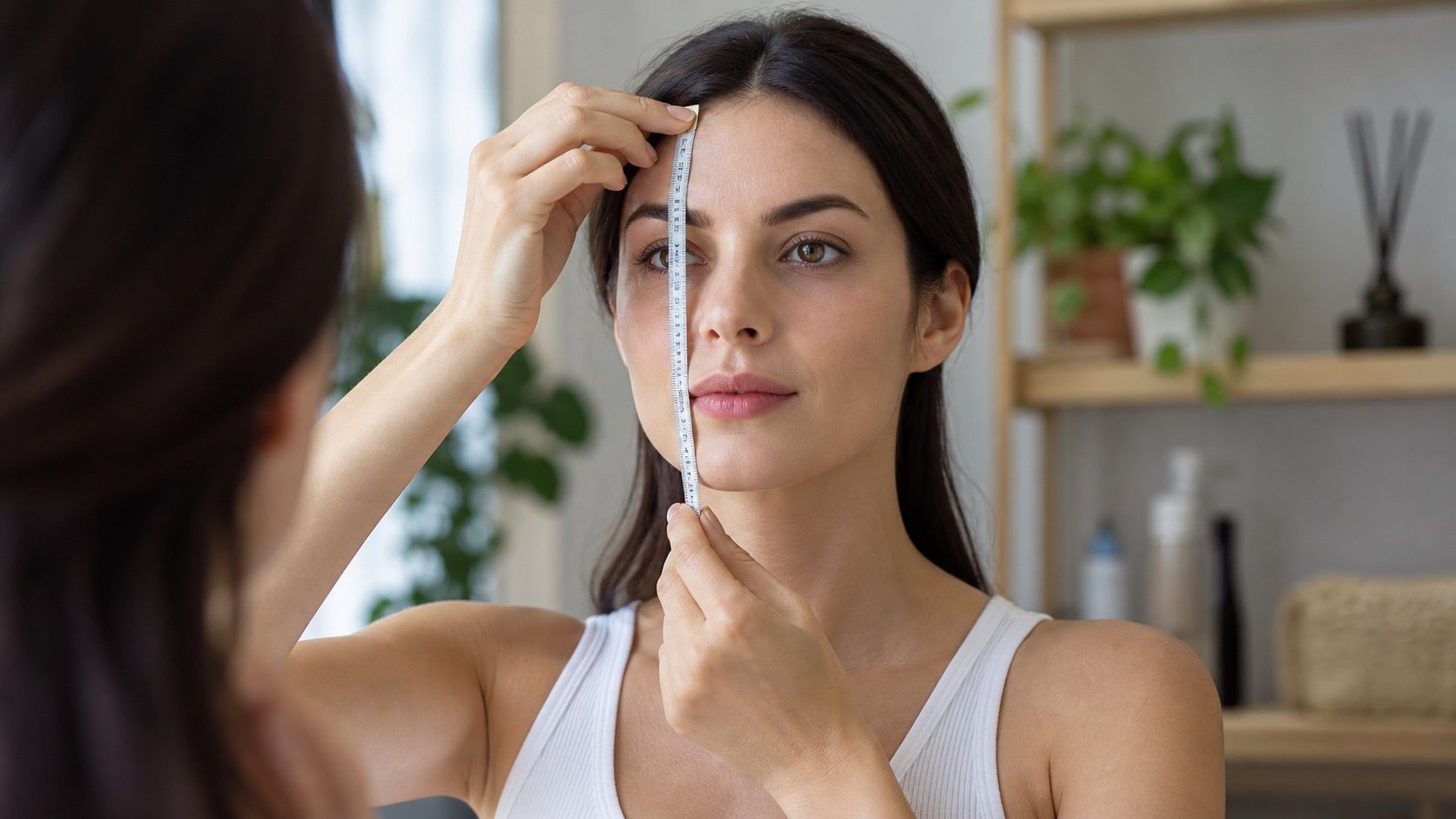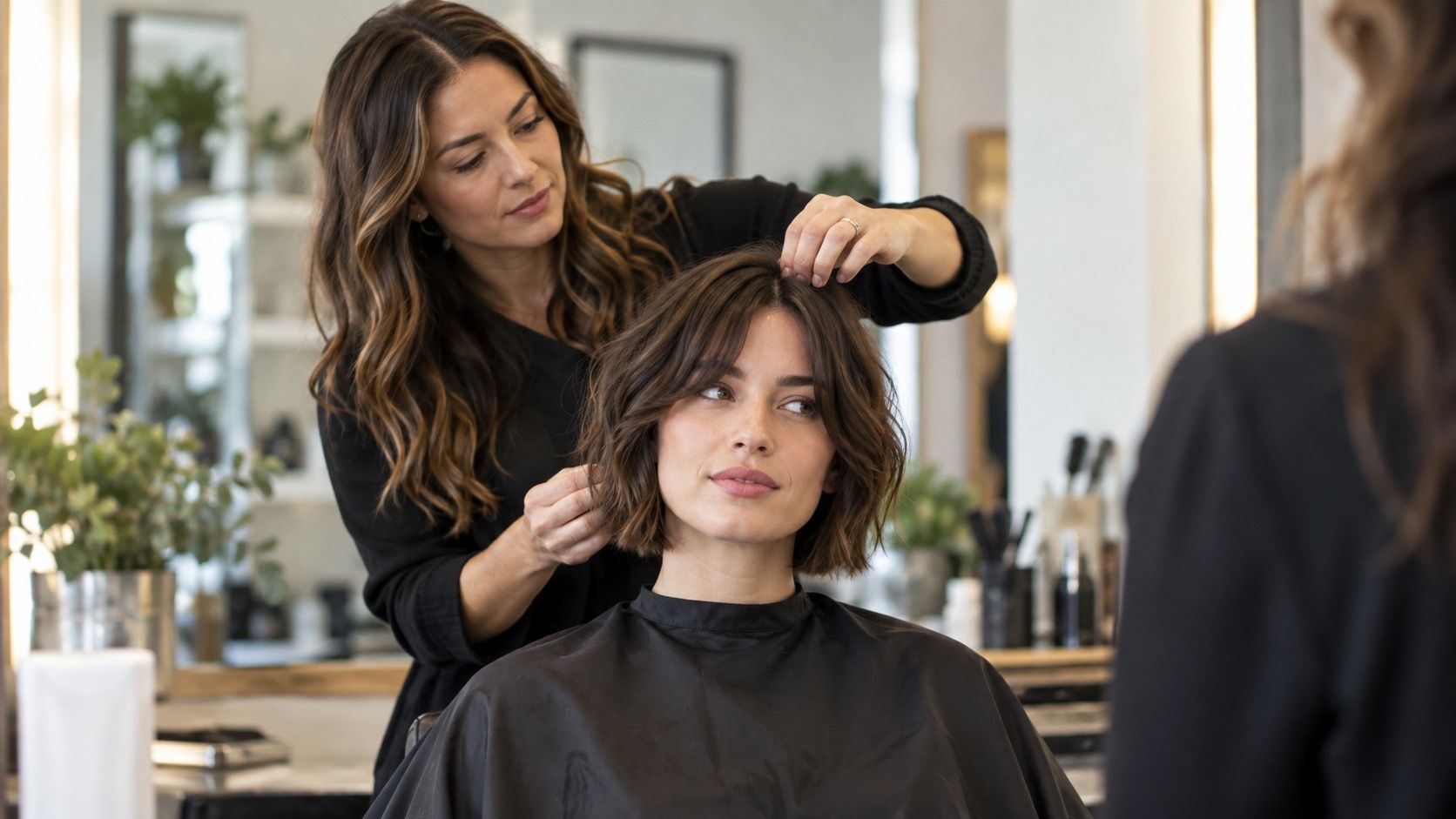
The search for the best hairstyles for face shape usually starts with a chart and ends in frustration. Charts act as if one word—oval, round, heart, square—can choose a haircut for you. In practice, your hair texture, hairline, density, styling time, and what you actually want to see in the mirror matter just as much. Face shape is useful, but it is one input, not the person holding the scissors.
Start with the change you actually want
Before naming your face shape, decide what you want a haircut to do. Perhaps you want your forehead to feel less exposed, your cheekbones to stand out, your jawline to look softer, or your curls to stop taking over the entire room. These are practical goals. “I need the correct cut for a round face” is much less useful because it hides the decision you are really trying to make.
Look at a few photos of yourself with hair styled differently. Notice what changes when there is volume at the crown, movement around the cheeks, or length near the jaw. A middle part with flat straight hair can make the face appear longer; a side part can add diagonal movement; a blunt fringe can shorten the visible forehead. None is universally better. Each creates a different emphasis.
Be honest about maintenance. A photo may show perfect face-framing layers, but if the effect requires a blow-dry, round brush, and ten quiet minutes every morning, it is not the same haircut on someone who air-dries before the school run. The best haircut for your face shape is one whose useful shape still exists on an ordinary weekday.
Also separate “I want a change” from “I want to disappear.” A haircut can balance proportions, but it does not need to hide every feature you have been taught to notice. Strong cheeks, a high forehead, and a defined jaw are not errors. The more useful question is whether a style makes you feel like yourself with a little more intention.
Use face shape as one input, not a set of bans
Face-shape guidance works when it points to visual balance. A round face may look longer with height or a side part; an oblong face may enjoy width around the cheeks; a heart-shaped face may like movement near the jaw; a square face may choose softness around the corners. The mistake is converting those tendencies into bans. “Never wear a bob” and “only side parts” are rules built for diagrams, not for hair.
Hair texture changes every recommendation. A jaw-length bob on fine straight hair can look crisp and narrow. The same cut on dense curls can create generous width at exactly the same point. A curly fringe behaves differently from a straight fringe; a cowlick can decide a parting more firmly than any face-shape chart. Let the hair you have negotiate with the proportions you see.
Length is not inherently flattering or unflattering. Long hair can elongate a face if it hangs flat and dark beside the cheeks, but it can also add width with waves, layers, or a lighter front section. Short hair can reveal the jaw, but it can also create width at the temples or softness through textured fringe. The distribution of volume matters more than the label on the salon menu.
Consider your profile too. Most charts judge the front outline, while a real haircut moves around the head. A high crown, blunt fringe, or long curtain bangs will change the side view as much as the front. Ask for a mirror check from several angles before deciding that a cut is wrong for your face shape.
Choose length and volume together
When choosing a haircut for my face shape, I find it more useful to map where the hair will sit than to focus on its final length. Hair ending at the cheekbone, jaw, collarbone, or chest creates a different horizontal line. If a particular part of your face already feels wide, a dense blunt edge there may emphasize it; if you want more balance there, it may be exactly the right place for texture.
For a face that feels long, width through the sides can interrupt the vertical line. That might mean waves, a textured bob, a fuller fringe, or layers that begin near the cheekbones. For a face that feels broad, extra height or softer vertical pieces can change the impression. These are starting experiments, not a compulsory formula. One person may love the dramatic effect the other person wants to reduce.
Crown volume deserves a separate decision. A little lift can stop fine hair from looking flat, but a tall, smooth crown can lengthen the face noticeably. If you want volume without extra height, ask for it at the sides or through movement rather than only at the top. A stylist can place layers differently once they know where you want the visual weight.
| Hair decision | Question to ask | Practical check |
|---|---|---|
| Length | Where will the densest edge land? | Pin your hair at cheek, jaw, and collarbone levels |
| Volume | Do I want height, side width, or both? | Compare photos with roots lifted and sides expanded |
| Layers | Which feature should the first layer frame? | Try face-framing pieces before cutting a full shape |
| Maintenance | Will this work without a salon blowout? | Ask for an air-dried example on similar hair |
Think about fringe and parting before committing
A fringe is one of the fastest ways to change the apparent proportions of a face because it changes how much forehead is visible. Full blunt bangs create a strong horizontal line and can make a long face feel more compact. Curtain bangs keep more air around the centre and can soften the transition from forehead to cheekbones. Side-swept fringe creates a diagonal, which is why it is often suggested when someone wants less symmetry.
The catch is that fringes live with your hairline, not with the inspiration photo. Cowlicks, fine hair, curls, humidity, and glasses can change how a fringe sits by lunchtime. If you are uncertain, begin with longer curtain pieces or a side fringe that can be pinned back. They give you information without trapping you in a high-maintenance cut.
Parting can be tested without any appointment. Make a centre part, a soft off-centre part, and a deeper side part in the same daylight, then take a photo of each. Look not for the one that makes you look “correct,” but for the one that supports the features you want to notice. Sometimes the supposedly ideal parting feels too polished, while another feels more alive.
Do not underestimate how a parting changes volume. A centre part may flatten the roots on one person and create lift on another. A side part can expose a sparse temple or solve it completely. This is why face shape hairstyle advice should stay flexible: the head of hair carrying the cut has its own strong opinions.
Test a reference photo like a designer, not a gambler
Bring reference images, but read them closely. What is doing the work in the picture: the cut, the colour, the styling iron, the model's density, or the camera angle? A shoulder-length cut with bright face-framing highlights may appear lighter and wider than the same cut in a single dark colour. A sleek image may have been photographed before one humid walk outside.
Choose two kinds of reference: one for the overall silhouette and one for the fringe, layers, or texture you like. Find people with a comparable hair type where possible. A celebrity with a similar face shape but twice your density may still inspire the shape, but your stylist needs to adapt the technique. A good reference opens a conversation; it does not order a copy.
Try a low-risk version first. Clip in a fringe, use rollers to create side width, pin the front sections back, or use a virtual try-on with a healthy dose of scepticism. Filters can distort face proportions, but they are still useful for testing whether you enjoy seeing a shorter visual line or a different parting. The goal is to learn your preference before removing inches of hair.
Take your test photos outside the bathroom. Daylight, a casual side angle, and a picture taken by someone else reveal more than a front-camera portrait. If a style only works under one ring light and from one angle, it may be a good photograph rather than a good haircut for daily life.
Have a useful conversation with your stylist
You do not need to arrive with a definitive face-shape label. Tell the stylist what you notice: “My jaw feels strong and I want more softness by my cheeks,” or “I like my forehead but do not want the cut to make my face look longer.” This is much more actionable than saying you read that a heart face must have certain bangs.
Ask what will happen when the cut air-dries, grows for six weeks, and is styled by you rather than by a professional. If you wear glasses, bring them. If you normally tuck one side behind your ear, mention it. If your hair shrinks dramatically when curly, say so before anyone chooses a finished length from a wet strand.
A thoughtful stylist may disagree with your first idea, but the explanation should be concrete: your crown has a strong growth pattern, your hair will lose volume at that length, or a fringe will separate in the middle. Those observations are more valuable than vague claims about what your face “can” or “cannot” wear. You are allowed to ask for a version that suits your taste anyway.
It can help to agree on a conservative first cut. Keep enough length to adjust, add face-framing layers before a dramatic fringe, or change the parting before changing the whole silhouette. Hair grows, but a staged approach gives you better feedback and fewer surprises when you wash out the salon styling.
Keep the rulebook in its proper place
The best hairstyles for face shape are not hidden in a strict list. They emerge from a few visible proportions combined with the hair you have, the styling you enjoy, and the kind of presence you want. A face shape label can suggest a useful experiment: add side width, reveal the cheekbones, soften a jaw, or break up a high forehead. It should never make a hairstyle feel forbidden.
Make your next decision small and observable. Change your part for a week. Try face-framing pieces. Save three images that show the same kind of volume. Notice how the style feels in motion, in wind, with glasses, and after an ordinary wash. Those details tell you more than a chart that has never met your hair.
If a reference cut makes you feel excited, that matters. Use face shape to ask better questions about how to adapt it, not to talk yourself out of it. The most successful haircut is usually the one that supports your features and your habits at the same time.
A haircut for your face shape should leave you with options, not a prescription. Learn where your hair adds width or height, keep the practical parts in view, and let your own taste make the final call. That is a far more reliable rulebook than any row of little geometric faces.